

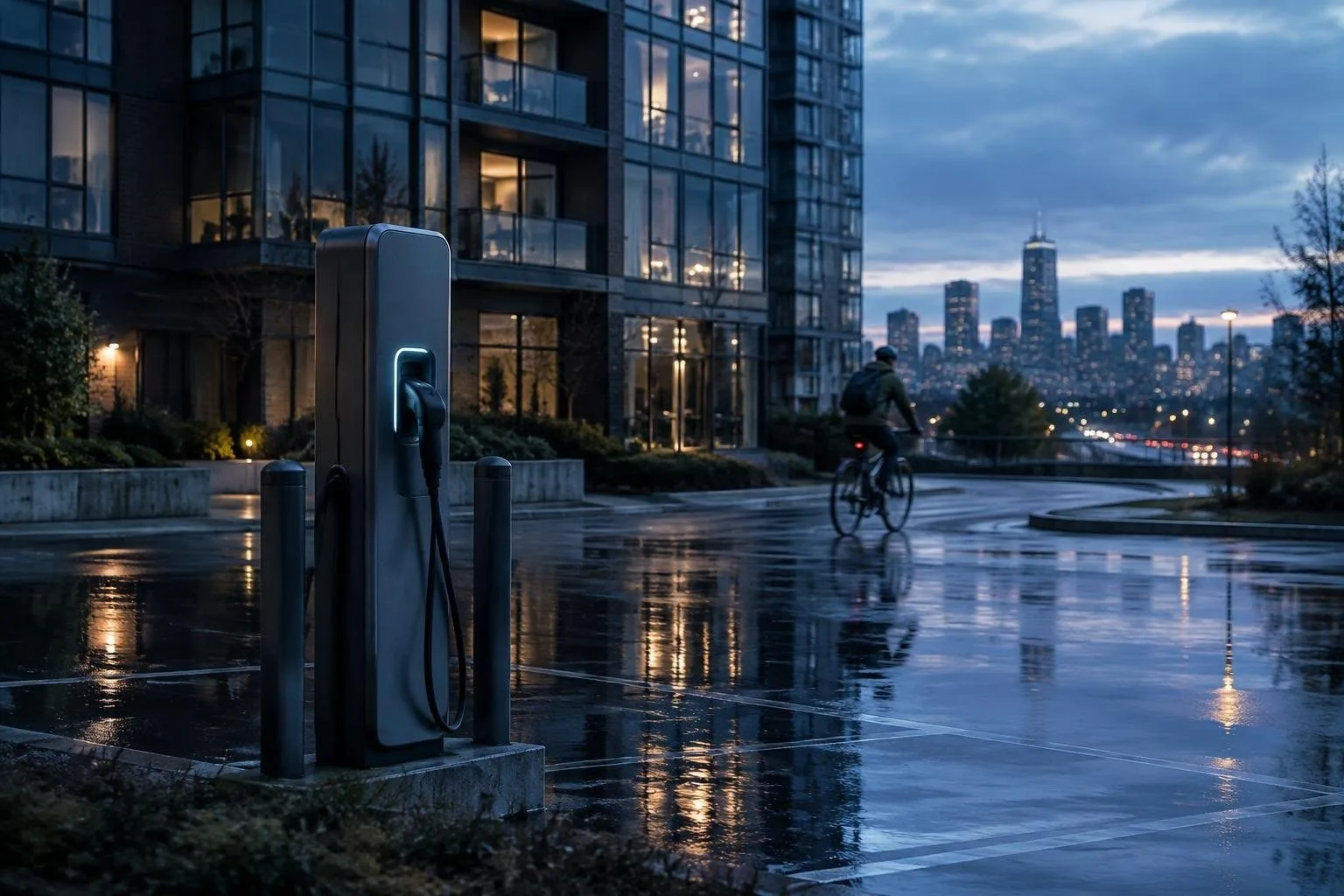
For decades, Hudson Companies has been shaping the Pittsburgh region’s housing landscape, from upscale rentals to senior-living communities. As tenant expectations evolve, the developer has turned its attention to the next generation of amenities: electric-vehicle (EV) charging stations. The shift mirrors earlier upgrades such as high-speed internet and secure package rooms, but the impact on daily life is already measurable.
Rental markets across the United States are witnessing a surge in EV ownership, and Pittsburgh is no exception. Residents who lack private garages now view on-site charging as a practical necessity rather than a luxury. Recognizing this trend, Billy Sullivan, director of construction at Hudson Companies, has championed the rollout of charging infrastructure at recent multifamily projects.
Resident convenience and property appeal
“At our apartment communities, we want to provide amenities that make everyday life more convenient,” Sullivan explained. “On-site EV charging allows residents to charge where they live, reducing the need to make separate trips to public stations. It also makes electric vehicle ownership more practical for apartment residents who don’t have their own charger.”
The convenience mirrors the experience of single-family homeowners who plug in overnight. For renters, the ability to park and charge in the same spot eliminates additional travel time and uncertainty about public-station availability. Moreover, the presence of charging ports can serve as a differentiator in a competitive leasing environment, helping owners attract and retain tenants.
Duquesne Light’s role in the rollout
Implementing a reliable charging network involves navigating electrical capacity, equipment selection, and construction scheduling. The Duquesne Light Company (DLC) Electrification Solutions team has become an essential partner, guiding Hudson through these technical hurdles. “Their support helps us understand electrical considerations and coordinate the installation with the property’s needs,” Sullivan noted.
Since 2024, the collaboration has yielded nearly 30 charging ports distributed across three Pittsburgh projects. DLC’s Community and Fleet Charging Make-Ready programs can underwrite up to half of the installation costs, and the utility offers project-management services either alongside Hudson’s team or through its own engineers. The program’s funding window closes on Dec. 1, prompting interested property owners to contact DLC at electricvehicles@.
Broader impact on the region
Beyond resident satisfaction, expanding charging access contributes to cleaner air by encouraging a shift away from gasoline-powered vehicles. Each on-site charger represents a step toward reducing local emissions, aligning with Pittsburgh’s broader sustainability goals.
For office and retail landlords, the presence of EV charging can draw customers and tenants who prioritize eco-friendly travel options. For multifamily owners, the technology is an investment in long-term asset appeal, potentially boosting property values and occupancy rates.
Hudson’s initiative, backed by DLC’s century-long commitment to regional electrification, signals a growing confidence that the transportation landscape of tomorrow will be electric. As more developers emulate this model, Pittsburgh’s streets may soon see a noticeable uptick in quiet, zero-emission vehicles parked at residential complexes.