

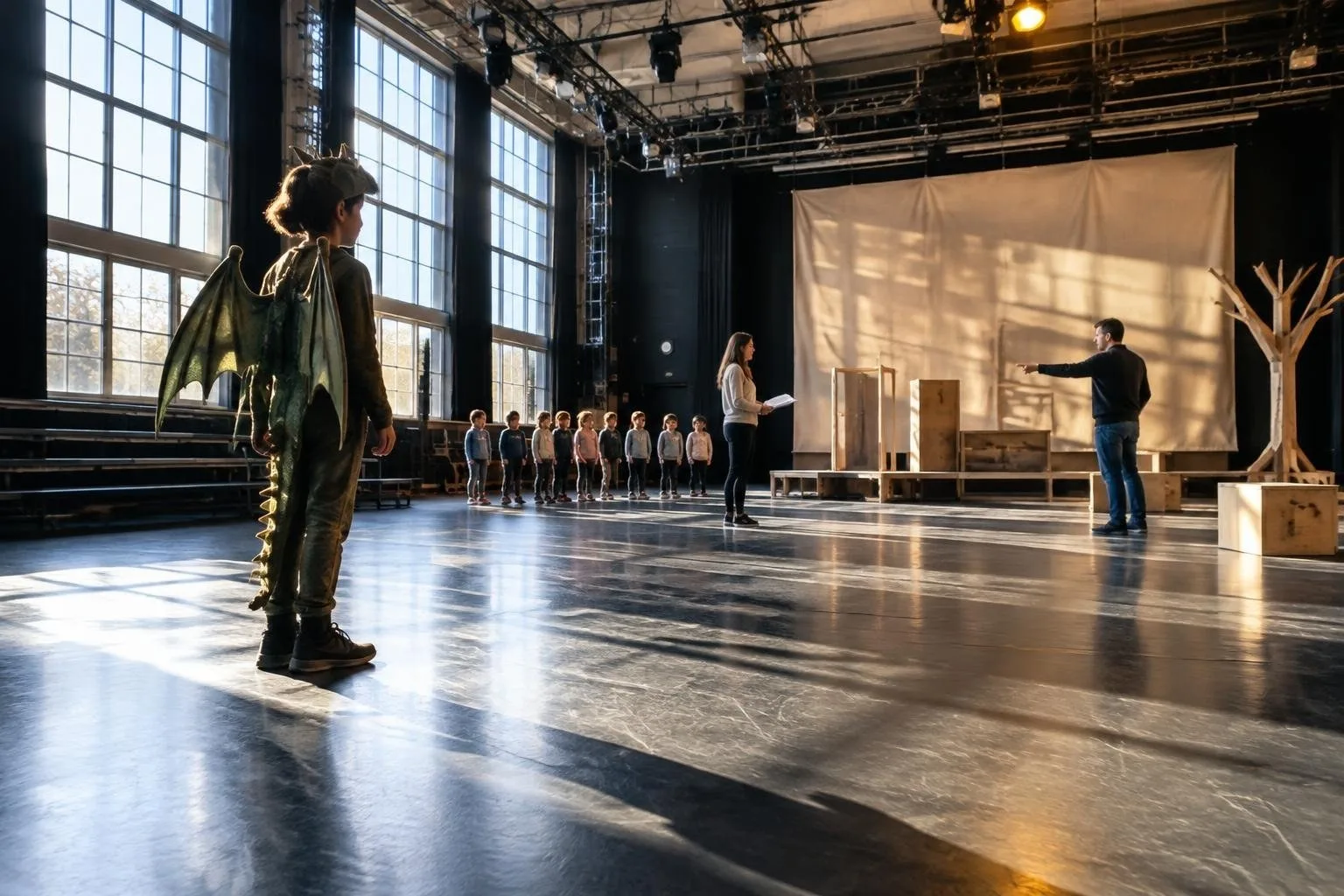
When the bell rings at 9 a.m. in the Hamilton Family Arts Center, a group of first, third and sixth graders files into a bright rehearsal space. By the time the day ends, the same children emerge as a dragon, a fairy and a vampire, each performing in a brand-new play they imagined, scripted and staged in just eight hours.
This intensive experience is the core of Play-in-a-Day, an annual program run by the Arden Theatre Company in Philadelphia’s Old City. The initiative fills the gaps left by school closures, giving K-6 learners a full day of theatre-based activities, from brainstorming characters to delivering a polished performance for parents.
What the day looks like
Each session begins with a rapid idea-generation round. Children suggest characters, settings and conflict, while teaching artists help them shape scattered thoughts into a coherent storyline. After the outline is set, the cohort rehearses dialogue, experiments with movement and designs simple costumes. By the afternoon, the group presents a complete production, complete with lighting cues and audience interaction.
The program runs roughly ten to fifteen times a year, with a fee of $90 per session (prices may vary during school breaks). Themes change to match the season: a Halloween “monster mash” class preceded the recent “enchanted forest” session on Nov. 3, prompting lively discussions about fairies and spirits. In director of education Elise D’Avella’s words, “They always come in with a ton of ideas,” noting how each child’s fresh perspective reshapes the creative process.
Collaboration, conflict and growth
Francine Odri, a three-year veteran of Arden’s education team, explains that the biggest hurdle is guiding kids toward consensus. “Sometimes they get to do their idea and then sometimes it’s someone else’s,” she said. “Being able to work successfully as a team and being kind to each other—because a lot of these kids are meeting each other for the first time today—helps us create a great product even when the final piece isn’t anyone’s original vision.”
When disagreements flare, Odri encourages students to step aside, discuss emotions, and return with a shared solution. Third-grader Zuri Grant observed, “Sometimes there’s better ideas,” and added that she learned not to flaunt a favorite concept because “your friends might be jealous.” This ethos of embracing mistakes aligns with the program’s goal to let children experiment without fearing a “right answer.”
Why theatre matters: research and expert insight
Developmental psychologist Thalia Goldstein of George Mason University emphasizes that theatre education nurtures mentalizing—the ability to infer others’ thoughts and feelings. Her research, published in the 2023 Journal of Policy Analysis and Management, shows that additional arts exposure improves writing scores, emotional empathy and school engagement, while reducing disciplinary incidents.
Goldstein notes that theater’s unique contribution goes beyond empathy: “It encourages kids to consider multiple viewpoints and to be brave in expressing ideas that feel unfamiliar.” She adds that a single day of creative rehearsal may not produce lasting psychological change, but it can spark curiosity, opening a door to future artistic pursuits.
Former participants echo this sentiment. Sixth-grader Ilan Walters, who has attended the program since first grade, says it helped him overcome a fear of public speaking. Zuri, meanwhile, dreams of becoming a babysitter, while fellow student Sidney Eckert admits he’s still exploring his passions—a perfectly acceptable stance for a first-grader.
Founded in 1988, Arden Theatre Company also runs the Arden Drama School, after-school acting classes, summer camps and the “Arden for All” outreach initiative, which brings theatre education to Philadelphia schools with limited arts funding. Through these diverse offerings, Arden reaches thousands of children each year, demonstrating how a single eight-hour experience can ripple through a community.