
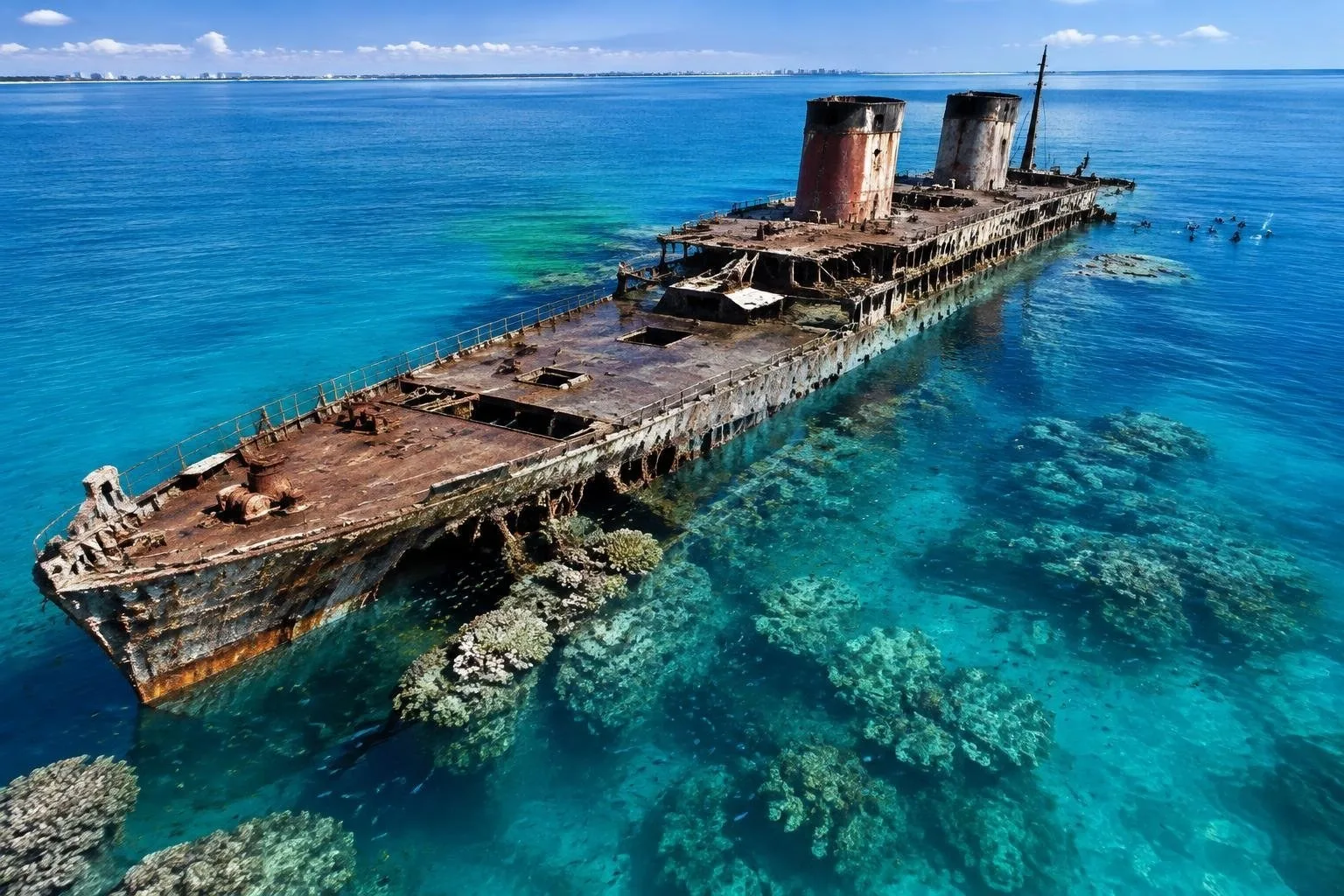
On Wednesday, Nov. 11, 2026, the 990-foot ocean liner known as the SS United States was carefully positioned for its final voyage beneath the surface of the Gulf off the Florida Panhandle. The ceremony, staged as part of a Veterans Day salute, marked the transition of America’s historic flagship from a museum piece to the world’s largest artificial reef. Beyond the somber moment, the event drew an unprecedented online audience, with more than 863,000 viewers tuning into a live YouTube feed.
The ship’s legacy stretches back to July 1952, when it shattered transatlantic speed records in both directions, cruising at over 38 knots—about 44 miles per hour. Over the decades, the SS United States welcomed presidents, celebrities, and countless travelers, cementing its status as a national treasure. The SS United States Conservancy, the nonprofit steward of the vessel, coordinated the sink-down after years of debates over the liner’s future.
Sinking ceremony and public participation
At approximately 9:55:00 into the livestream, workers began pumping seawater into the hull, a visual cue that the ship was filling. Spectators on the shore of Destin-Fort Walton Beach could touch the massive anchor chain, while those aboard nearby boats circled the vessel to offer a final salute. The crew ceremonially removed the American flag, folding it with meticulous care before placing it on deck—a symbolic farewell to the ship’s proud nautical past.
As the night deepened, floodlights from tugboats illuminated the towering hulk, casting the iconic “UNITED STATES” lettering on the bow into a haunting glow. Water surged from over 400 vacant portholes, and the liner slowly tilted before settling upright on the seabed. The final moments were captured by the live audience, who watched the hull disappear into the inky Gulf as the ship’s silhouette vanished beneath the waves.
Future as the world’s largest artificial reef
Positioned roughly 22 nautical miles southwest of Destin-Fort Walton Beach (coordinates 30° 07.148′ N, 86° 46.755′ W), the sunken vessel will serve as a massive substrate for marine life. Scientists from the Woods Hole Oceanographic Institution, the Dauphin Island Sea Lab, and Louisiana State University have pledged a decade-long monitoring program to study colonization patterns and ecological impact.
The reef is expected to attract scuba divers, spearfishers, and recreational anglers for years to come. Okaloosa County tourism director Jennifer Adams expressed enthusiasm, noting that the former liner will become a unique underwater attraction for a community that traditionally relies on fishing. The reef’s scale—surpassing any previous artificial structures in the Gulf—promises to boost biodiversity and provide new research opportunities.
Land-based preservation and museum plans
While the hull rests beneath the waves, key components of the ship will be salvaged for display on land. The two 65-foot smokestacks, removed during preparatory work in Mobile, Alabama, will become centerpiece exhibits in an upcoming museum operated by the SS United States Conservancy. Additional artifacts—including propellers, the radar mast, a vintage cocktail bar, and assorted memorabilia—will be incorporated into a purpose-built visitor experience slated for the Destin-Fort Walton Beach area.
“By incorporating iconic components from the historic ocean liner into an architecturally stunning, land-based museum, the SS United States will continue to excite and inspire future generations,” said Susan Gibbs, the Conservancy’s president and granddaughter of the ship’s designer, William Francis Gibbs. Okaloosa County Board Chairman Trey Goodwin highlighted the dual legacy, noting that the reef and museum together will keep the vessel’s story alive for both underwater explorers and land-based tourists.
The coordinated effort reflects a rare convergence of heritage preservation and marine engineering. As the ship settles into its new role, divers will be able to explore the interior spaces once reserved for passengers, while researchers track the reef’s development. The transformation of the SS United States stands as a testament to adaptive reuse, turning a beloved, aging liner into a thriving marine habitat and an enduring educational resource.