
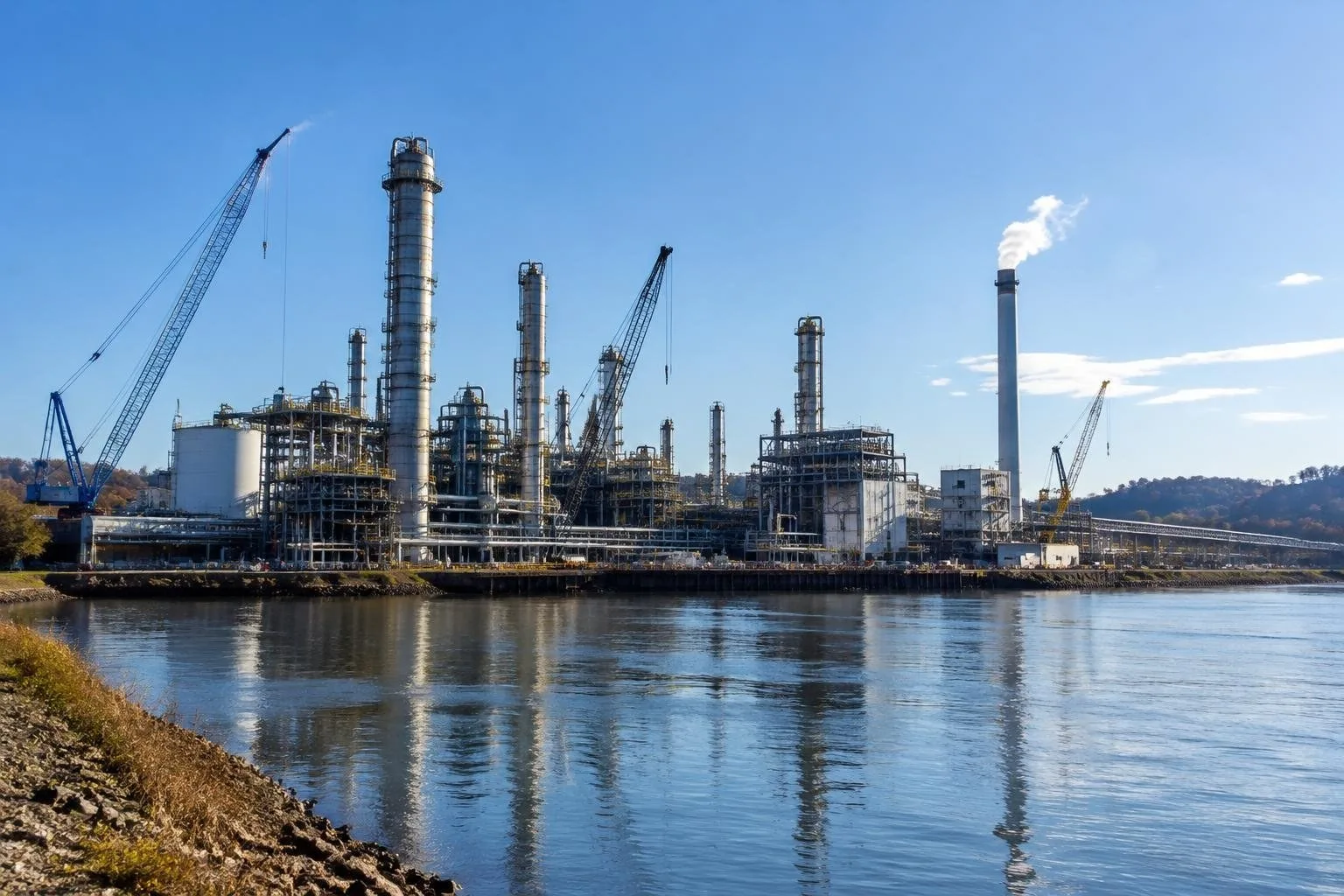
The Shell Polymers ethane-cracking complex that sits on the Ohio River in Monaca, Pennsylvania, has been under intense scrutiny since its launch in early 2022. State regulators imposed a $15 million monetary sanction in September, branding it the largest recent penalty for a single emissions breach in the Commonwealth. Yet community advocates argue the fine merely translates into a “gift” for local projects rather than a deterrent that forces the plant to halt unlawful releases.
Track record of violations since 2022
Official records from the Pennsylvania Department of Environmental Protection (DEP) reveal a disturbing pattern of non-compliance. Within the first two years of operation, the facility logged roughly one hundred equipment malfunctions and sixty-seven formal notices of violation. These notices cite the release of hazardous air pollutants such as the carcinogen benzene and the volatile compound 1,3-butadiene, as well as improper flaring events, water-discharge contamination, and numerous equipment infractions. Each breach represents a direct contravention of the federal Clean Air Act, a law designed to protect public health from airborne toxins.
Beyond the paperwork, residents have reported an uptick in respiratory ailments, headaches, and other health concerns that they attribute to the plant’s emissions plume. The repeated nature of the violations suggests that the facility’s internal monitoring and corrective procedures are either insufficient or deliberately circumvented, fueling a growing sense of mistrust among the surrounding neighborhoods.
Penalty structure and reporting loopholes
When the DEP first negotiated a Consent Order and Agreement (COA) with Shell in 2023, the company agreed to divert roughly $5 million into a community-mitigation fund. A steering committee, composed of local stakeholders, was tasked with allocating those resources to projects aimed at improving environmental quality, health services, and overall quality of life. While the fund generated short-term benefits, critics contend that the approach pits community groups against each other for limited charitable dollars instead of securing lasting compliance.
The most recent amendment to the September 2026 agreement further weakens oversight. It permits Shell to scale back its emissions reporting frequency once it demonstrates three consecutive months of compliance with an amended 12-month emission limit. Under the new schedule, reporting would shift from monthly submissions for two quarters to quarterly filings, and could ultimately cease until the plant secures a new operating permit. Such a reduction in transparency raises questions about whether the DEP’s enforcement strategy genuinely protects residents or merely provides a regulatory escape hatch for a billion-dollar corporation.
Safety incident highlights systemic risks
On June 4 2025, the ethane-cracking furnace suffered a catastrophic explosion and fire, inflicting $95 million in property damage. A subsequent investigation by the U.S. Chemical Safety Board (CSB) identified inadequate safeguards and fundamental design flaws as primary causes. The incident underscored the plant’s vulnerability not only to environmental infractions but also to acute safety hazards that threaten workers and nearby residents alike.
These recurring breaches, coupled with the recent easing of reporting requirements, illustrate a broader regulatory challenge. Pennsylvania law does allow for criminal penalties against operators who deliberately flout permits over extended periods, yet the current financial penalties appear negligible compared with Shell’s multi-billion-dollar revenue. Community advocates argue that only a substantially larger fiscal consequence will compel the company to prioritize genuine emission reductions and protect public health.